
AI identity verification uses machine learning to do what manual review teams did a decade ago: read identity documents, spot forgeries, match faces, detect spoofing, and score risk, in seconds instead of days. The technology is genuinely good now. It is also being marketed as more autonomous than it is, so this is an honest map: what the models actually do, what changed with deepfakes, and where a human still needs to be in the loop.
Where the AI actually sits
"AI verification" is not one model. It is four different jobs.
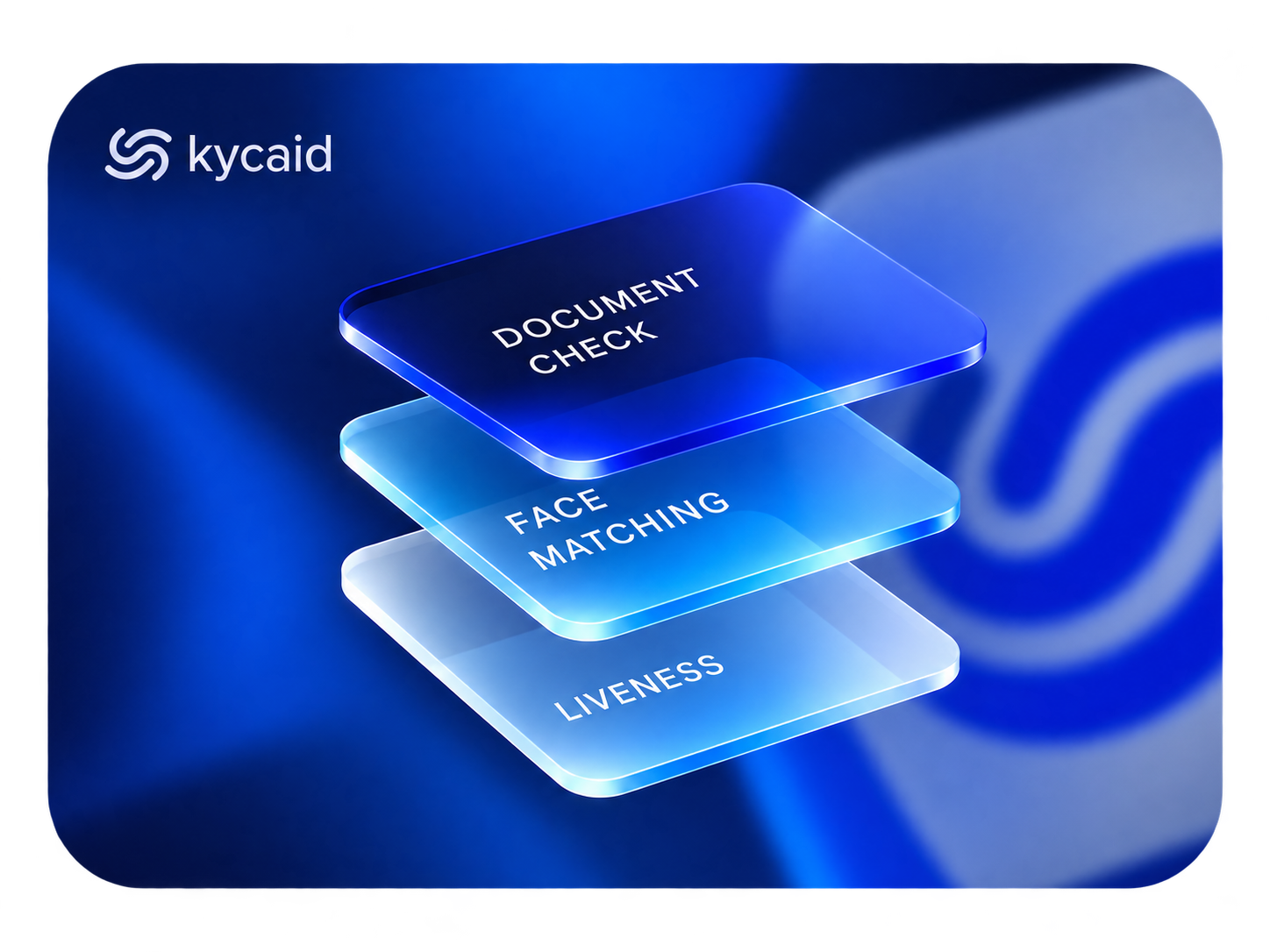
◇Reading documents. OCR models extract names, dates, and numbers from thousands of document layouts, including damaged and poorly photographed ones. Computer vision then runs document forgery detection: comparing the capture against known templates, checking font metrics, security feature placement, and signs of digital tampering across 14,000+ document types. This is the most mature layer; models see more document variants in a week than a human examiner sees in a career.
◇Matching faces. A model compares the selfie to the document photo and outputs a similarity score. Modern face matching handles aging, glasses, lighting, and the gap between a passport photo from 2017 and a face today. Teams integrating a face recognition SDK get this plus quality checks that reject unusable captures before they waste a verification.
◇Detecting live humans. Liveness models distinguish a present person from a photo, a screen replay, a printed mask, or an injected video. This is the layer under active attack, which brings us to the interesting part.
◇Scoring risk. Behavioral and device signals, velocity patterns, and data consistency feed models that flag what none of the individual checks caught: the technically valid application that looks like the last two hundred fraud cases.
What deepfakes changed
Generative AI moved identity fraud from a craft to a download. Face swaps run in real time on consumer hardware; synthetic documents render in minutes; injection attacks feed fake video directly into the verification stream, bypassing the camera entirely.
The defense changed accordingly. Deepfake-resistant liveness detection now analyzes texture, depth, and micro-signals that generation pipelines get wrong, and injection detection watches the integrity of the capture channel itself, not just the pixels in it. This is an arms race in the literal sense: both sides ship updates. Any vendor claiming a solved problem is describing last quarter.
The strategic takeaway for buyers is layering. Document checks, biometrics, liveness, and risk signals fail independently. A deepfake that beats face matching still has to beat injection detection and produce a document that survives template analysis. Single-layer verification is what the fraud tooling is optimized against.
Where humans still decide
Three categories resist automation honestly. Genuine edge cases: damaged documents, rare document types, significant appearance changes, where the model's correct output is "uncertain," not a guess. Regulated judgment: some jurisdictions require human involvement for specific decisions, and EDD sign-offs stay human everywhere. And contested outcomes: when a real customer fails automated checks, routing to a live agent for a recorded video session resolves what the pipeline cannot, without silently losing the customer.
The operating model that works is division of labor: AI handles volume and pattern detection, humans handle exceptions and accountability. Vendors selling zero-human verification are optimizing a demo, not a compliance program.
Questions to ask any AI verification vendor
Accuracy claims without conditions are marketing. Ask: what are the false accept and false reject rates, on what population, and how do they differ across demographics? Independent bias testing matters because face recognition error rates historically varied by skin tone and age, and regulators have noticed. Ask what happens on model uncertainty (escalation or forced decision), how injection attacks are detected, and how fast document template coverage updates when countries redesign IDs. The vendors doing the work answer specifically. The others send a deck.
FAQ
🔹Is AI identity verification accurate? On clean captures, document and face matching accuracy is high and exceeds human reviewers at scale. Accuracy claims should always come with false accept and false reject rates and the population they were measured on.
🔹Can AI verification be fooled by deepfakes? Basic face matching alone, yes. Layered systems with modern liveness and injection detection catch the overwhelming majority of current attacks, and the detection side updates continuously because the generation side does.
🔹Does AI replace human KYC reviewers? It replaces the volume work. Humans remain for edge cases, contested decisions, enhanced due diligence, and everywhere regulation requires accountable judgment.
🔹Is automated identity verification legal? Broadly yes across major markets, with conditions: data protection rules like GDPR govern biometric processing, and some jurisdictions require consent flows or human review options. Legal review of your specific flow is not optional.